Imports & VAT
Importing Products from Third Countries (China): VAT, Customs Duties and Accounting Treatment
Published · 10 min read · NS Accounting & Tax Office
Written by the NSTAX team of accountants and tax advisersLast updated:
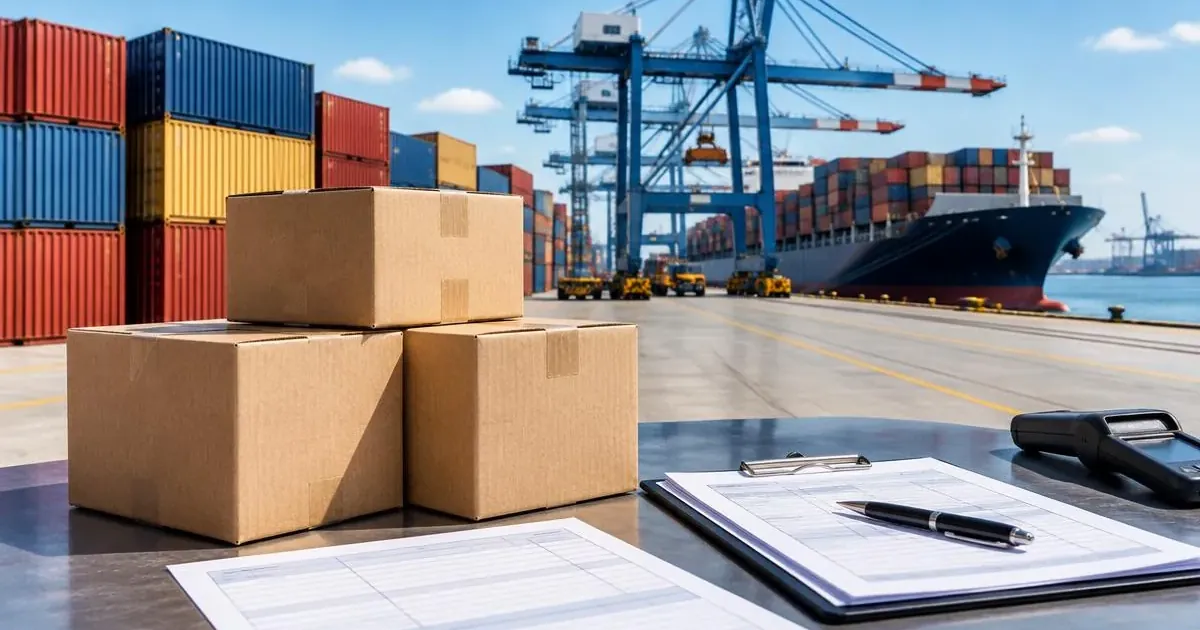
Imports from China and other non-EU countries are an everyday reality for thousands of Greek businesses, from trading companies to e-shops. In 2026, however, the landscape changed: from 1 July the customs exemption for parcels up to €150 was abolished, and from 1 November a new EU handling fee was added. Most reports concern consumers ordering from platforms, but a business importing goods has different obligations and costs. In this article, NSTAX explains how these two cases differ, how VAT and duties are calculated and how imports are recorded in the books.
Two Different Cases
The rules depend on how the products reach the final customer:
- Commercial import: the business buys goods from a supplier in a third country, clears them through customs in Greece and sells them or uses them in its activity. Normal customs clearance, duty and import VAT rules apply.
- Direct sales to consumers (B2C): the seller or platform sends the product directly from the third country to the private customer, usually in a parcel worth up to €150. The new special rules for 2026 apply here.
Commercial Imports: What You Pay at Customs
When importing goods for your business, the following are generally paid during customs clearance:
- Customs duty, calculated according to the product’s tariff classification and origin
- Import VAT, at the rate applicable to the product
- Any other charges and taxes, depending on the type of product
Submitting a customs declaration generally requires an EORI number and usually cooperation with a customs representative. Accurate tariff classification is critical because it determines the duty and any additional duties or restrictions for certain products.
How Import VAT Is Calculated
Import VAT is not calculated solely on the value of the supplier’s invoice. The taxable amount is essentially the customs value of the goods, meaning the purchase price together with freight and insurance up to the EU border, plus customs duties and other charges paid during clearance. A customs duty therefore also increases the base on which VAT is calculated.
Import VAT Is Deductible; Customs Duty Is Not
There is a fundamental distinction in the accounting and tax treatment of imports:
- Import VAT paid at customs is input VAT and is deducted by the business in its VAT return, provided it has a right of deduction (meaning the import relates to its taxable transactions and does not fall within the statutory exceptions)
- Customs duty is not recovered as VAT. It is included in the acquisition cost of the goods, together with freight and other expenses up to the warehouse, and affects inventory cost and the profit margin
If the business belongs to the special small business exemption scheme, it has no right to deduct import VAT, and this amount is a real cost.
New 2026 Rules for Parcels up to €150
For distance sales of goods worth up to €150 from third countries to private consumers, the following rules apply from 2026:
- From 1 July 2026: the customs exemption is abolished and a temporary special duty of €3 is imposed for each distinct type of goods, not per parcel
- From 1 November 2026: an EU handling fee of €2 per customs item is added, bringing the total charge to €5 per item for consignments up to €150
- The temporary €3 duty applies until 1 July 2028, after which the normal tariff regime is envisaged
- The duty is paid to the customs authorities by the import declarant, meaning the platform, seller, transport company or their authorised representatives, depending on the management model
- The new rules do not change VAT accounting procedures for distance sales of imported goods
In the declaration, products with the same tariff classification and description can be declared as one item, so the charge is imposed once. Products belonging to different categories are charged separately. For example, three identical shirts in one parcel are charged €3, whereas three shirts in three separate parcels are charged €9. By contrast, when a company brings products in bulk into an EU warehouse, clears them as a commercial import and then sells them, the final sale to the consumer is not treated as an import from a third country.
The IOSS System and VAT on Sales up to €150
For distance sales of goods worth up to €150, VAT is collected depending on whether the seller or platform participates in IOSS. If it does, VAT is calculated and collected at the time of sale and is not imposed again during customs clearance. If it does not, VAT is collected from the recipient on importation. This choice affects the final price and customer experience, so every e-shop shipping directly from third countries should decide on it from the outset.
Two Calculation Examples
Example 1: Commercial import
- An IKE imports goods from China:
- Value of goods: €10,000
- Freight and insurance up to the EU border: €800
- Customs value: €10,800
- Duty at an illustrative rate of 6.5%: €10,800 × 6.5% = €702
- VAT base: €10,800 + €702 = €11,502
- Import VAT at 24%: €11,502 × 24% = €2,760.48
- Amount paid at customs: €702 + €2,760.48 = €3,462.48
- The €2,760.48 VAT is deducted in the VAT return, provided the company has a right of deduction. The acquisition cost of inventory is €10,000 + €800 + €702 = €11,502, plus any additional freight expenses within Greece.
Example 2: Direct sale to a consumer (dropshipping)
- A Greek e-shop sells a phone case for €12 and ships it directly from China to the customer. The parcel contains one distinct item, so from 1 November 2026 the charge is €3 duty + €2 fee = €5, approximately 42% of the selling price (€5 / €12). If the parcel also contains a charger belonging to a different tariff category, there are two items and the charge doubles to €10. The example shows that for low-value products the fixed fee can wipe out the profit margin.
The amounts and rates in the examples are illustrative.
Which Documents You Need to Keep
For every import, retain:
- The supplier’s invoice and packing list
- The customs declaration and proof of payment of duties and VAT
- Freight and insurance invoices, as well as the customs representative’s invoice
- Proof of payment to the supplier by bank payment, so that the expense is deductible
- The certificate of origin or other documents, where required for the specific product
The Most Common Mistakes
- Calculating import cost using only the supplier’s price, without customs duties, freight and VAT
- Confusing commercial import rules with the new rules for parcels up to €150
- Deducting import VAT without a right of deduction, for example for a business under the special small business scheme
- Incorrect tariff classification of products, resulting in different duties and delays
- Paying third-country suppliers in cash or through untraceable methods, putting the expense’s deductibility at risk
- Failing to anticipate the fixed per-item fee when pricing low-value products in e-shops
5 Practical Tips
- Calculate the full landed cost of every product before deciding selling prices: supplier price, freight, insurance, duty and other charges.
- Work with a customs representative on accurate tariff classification and checking any restrictions or additional duties for your product.
- If shipping directly to consumers, decide from the outset whether to use IOSS and how the new charges will be reflected in the price.
- Pay overseas suppliers through a bank and retain all import documents.
- Inform your accountant before every new import so that acquisition cost and import VAT are recorded correctly.
Frequently Asked Questions
Which VAT do I pay when importing goods from China?
Are customs duties deductible?
Does the €3 duty also apply to commercial imports?
What is the new €2 fee from 1 November 2026?
What is IOSS and does it concern me?
Importing Products or Planning to Start?
NSTAX, an accounting and tax advisory firm in Athens, calculates the full import cost of your products, ensures VAT and duties are recorded correctly and guides you through the new obligations for 2026. Contact us before your next order.
See also intra-Community supplies of goods, the reverse charge for intra-Community services, VAT refunds for credit balances arising from imports and NSTAX business services.
Customs rules and charges for imports from third countries change frequently and may be amended by subsequent decisions of AADE and the EU. The examples and rates are illustrative. For an accurate picture of your own business, contact us.