myDATA & Invoicing
Electronic Invoicing Provider or the timologio App: How a Business Chooses
Published · 8 min read · NS Accounting & Tax Office
Written by the NSTAX team of accountants and tax advisers
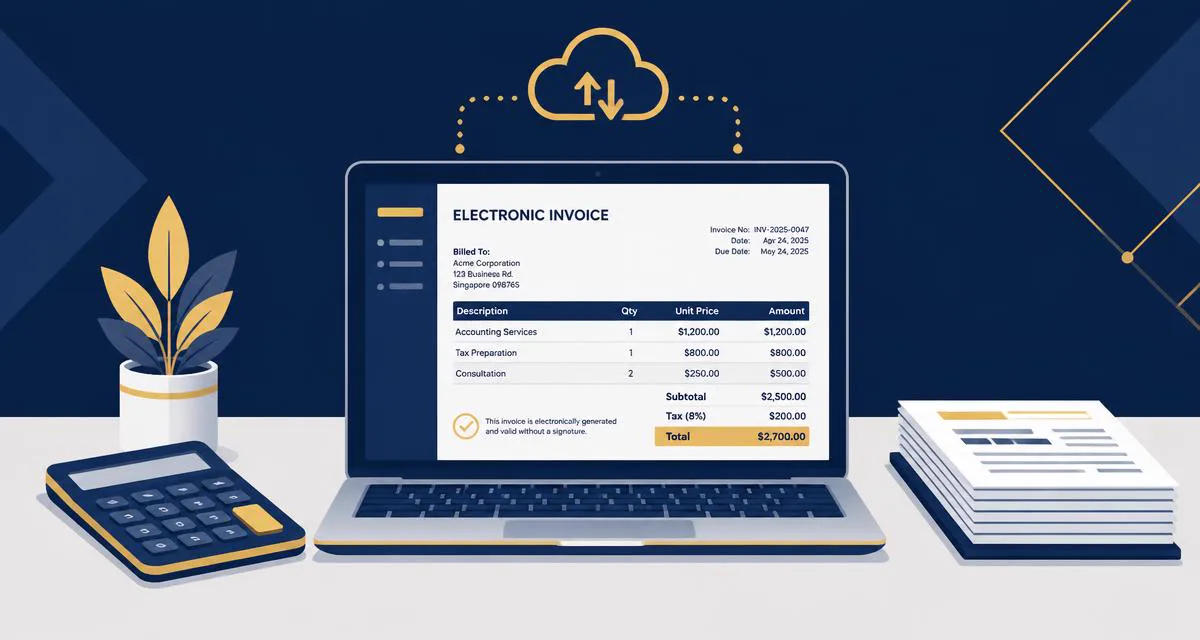
Since 1 October 2026, electronic invoicing applies to all businesses, and the first decision every entrepreneur must make is how to issue invoices: through a commercial provider or through AADE’s free application. The impression that compliance necessarily requires a provider subscription is mistaken, but the free solution does not suit every business either. In this article, NSTAX explains what options exist, the criteria for choosing the right one and the mistakes that prove costly.
Who It Affects and From When
Mandatory electronic invoicing for business-to-business (B2B) and business-to-government (B2G) transactions is being rolled out in two phases:
- Phase A, from 2 March 2026: businesses with a turnover above €1,000,000 (based on 2023)
- Phase B, from 1 October 2026: all remaining businesses, regardless of their document volume
The obligation concerns sales to other businesses and public sector bodies. If you issue receipts exclusively to private consumers, you are not covered by the same obligation, but transmitting data to myDATA remains a separate obligation. Accepting electronic invoices from suppliers is also a separate obligation, in force since 2 March 2026 for entities subject to the Greek Accounting Standards.
The Two Ways to Issue Invoices
A business can issue its electronic invoices in one of two ways:
- AADE’s timologio application (and the mobile version, myDATAapp): a free application from the tax administration, with no cost and no contract with a provider. AADE does not register this choice on the business’s behalf; the business makes the declaration itself.
- A commercial provider: a licensed software company, referred to in official texts as YPAIES (Electronic Document Issuance Provider Services), with a monthly or annual subscription. AADE publishes the list of licensed software.
When timologio Is the Right Fit
AADE’s free application is usually sufficient when:
- You issue a relatively small number of invoices per month, for example a freelancer with a small number of business clients
- You do not need integration with commercial management software or an e-shop
- You do not need specialised technical support beyond AADE’s general support
When a Commercial Provider Is the Right Fit
A commercial provider makes sense when:
- Invoice volume is high and manual issuance would absorb significant time
- You need automatic integration with your commercial management software, accounting software or e-shop
- You want specialised support for transmission errors, cancellations and document corrections
- Your business issues complex documents, such as credit notes, delivery notes or invoices with multiple VAT rates
How to Choose a Provider in Six Steps
- Record your needs: how many invoices you issue per month, whether you sell to businesses, consumers or both, and which software you already use.
- Check that the software is licensed, based on the list published by AADE.
- Make sure it works with your accounting software, commercial management software or e-shop, so you do not have to type in every document manually.
- Ask how it handles transmission errors, cancellations and corrections, and what support it offers.
- Compare the total cost: subscription, monthly document limit, charges for additional documents and the cost of integrating with other software.
- Test the system with a trial period, if offered, before committing, and complete the declaration of your choice in myDATA.
How Much It Costs
The cost of commercial providers varies significantly. For a small volume of documents, subscriptions start indicatively at around €10 per month, while for larger volumes or integration with commercial management software the cost rises and can reach several tens of euros per month. The comparison must also take hidden costs into account: the time required for manual issuance in the free application, when volume is high, can exceed a provider’s subscription. These amounts are indicative and differ by provider.
The myDATA Declaration: Do Not Forget It
Regardless of which issuance method you choose, the business must declare its choice through the myDATA platform, in the section for declarations of electronic document issuance via a provider or the timologio application. For those choosing timologio, the declaration is made by stating the public provider (e-timologio) as the provider type, B2B and B2G as the transaction types, and an effective start date no later than 1 October 2026. According to publications, the deadline for this declaration in Phase B was 12 October 2026. If you have not yet made the declaration, contact your accountant immediately so that the available options and any transitional arrangements can be checked.
An Example: Two Businesses, Two Different Choices
Example 1: A freelance consultant issues around 10 invoices per month to businesses. They have no commercial management software and no need for specialised support. The free timologio application fully covers their obligation, at no cost.
Example 2: A trading IKE issues around 300 documents per month, uses commercial management software and runs an e-shop. If issuance were done manually, at an indicative 2 minutes per document, the total time would be 300 × 2 minutes = 600 minutes, or 10 hours per month. At an indicative labour cost of €15 per hour, that corresponds to around €150 per month, without counting the risk of errors. A provider with automatic integration into the company’s software, at an indicative cost of €40 per month, eliminates the manual work and reduces errors. For this business, the paid solution is more economical in practice. The amounts are hypothetical and are used only to illustrate the logic of the comparison.
The Most Common Mistakes
- Choosing a provider on price alone, without checking that it is licensed and compatible with the business’s software
- Omitting the declaration of the choice in myDATA, even though the business already issues electronic invoices
- Assuming that responsibility for correct transmission lies with the provider or the accountant, when it lies with the business itself
- Using timologio for a high volume of documents, resulting in a time-consuming and error-prone process
- Confusing transmission to myDATA with B2B electronic invoicing, which are related but separate obligations
- Postponing the choice until the last minute, when moving to a new system requires testing and adjustment
5 Practical Tips
- Calculate your monthly document volume first, because it determines which solution is worthwhile.
- Ask your accountant to confirm that the provider you are considering works with your accounting software.
- Test document issuance, including credit notes and cancellations, before real use.
- If you have an e-shop, check that the provider integrates automatically with your platform.
- Keep proof of the myDATA declaration and record which provider or application you have declared for document issuance.
Frequently Asked Questions
Which phase of electronic invoicing applies to me?
Do I necessarily have to pay a provider?
If I only invoice private individuals, what changes for me?
How do I know a provider is legitimate?
Who is responsible for errors in document transmission?
Need Help with the Choice and the Declaration?
NSTAX, an accounting and tax advisory firm in Athens, assesses your business’s volume and needs, guides you to the right choice between a provider and timologio, and handles the myDATA declaration. Contact us before you run into fines and incompatibilities.
Explore NSTAX business services too.
The deadlines, procedures and transitional arrangements for electronic invoicing may be amended by newer AADE decisions. The cost amounts and examples are indicative. For an accurate picture of your own business, contact us.